The Curse of Skeleton Munroe

Category: Larry Steele

  • MEDIA IN COMICS 016

    MEDIA IN COMICS 016

    Production on these Media in Comics showcases must sadly slow down now, for I have worked my way through my backlog. As evidence of this, today we are showcasing some magical books, which are genrally unique items that fall under nobody’s definition of mass media but which I want to include anyway, for fun’s sake.

    Books of Magic:
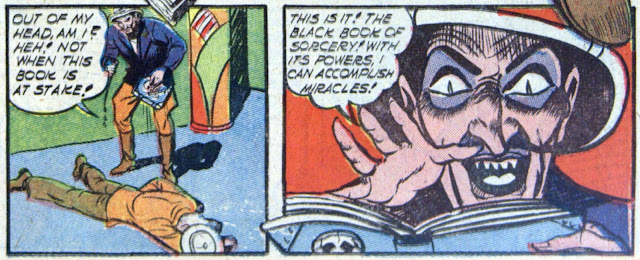
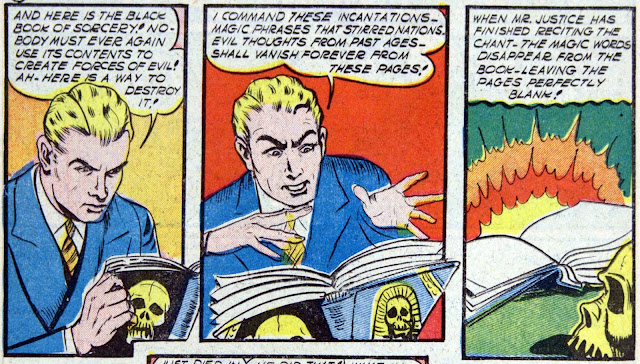
    You all remember the fabled Black Book of Sorcery that the wicked Egyptologist Ford committed all those murders for, well here it is! Until Mr Justice wipes its pages with a convenient self-destruct spell contained within it, that is.

    Origin: Ancient Egyptian 

    Status: Destroyed (Jackpot Comics 003, 1941)
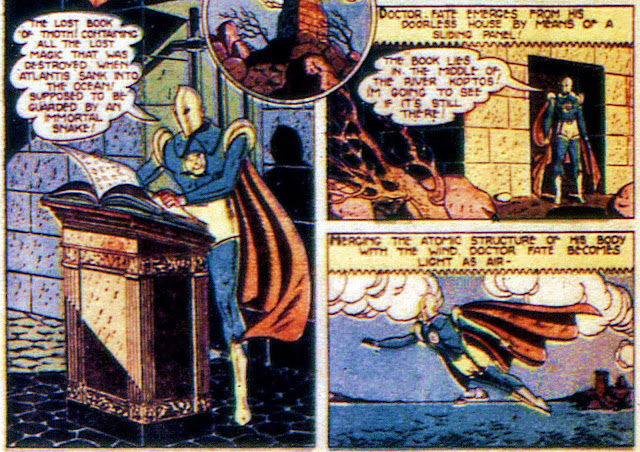
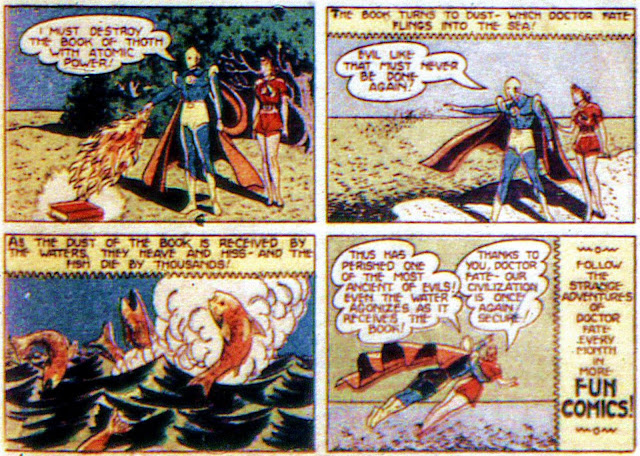
    The Lost Book of Thoth, containing all the magics of sunken Atlantis, is supposed to rest on the bottom of the Nile under the watchful eye of an immortal serpent. The plans of mice and men and whoever is in charge of everlasting snakes often go astray, alas, and the book is stolen by an unnamed mage and nearly used to destroy the world. Having solved that particular problem, Dr Fate doesn’t take any chances and reduces the book to a powder.

    Origin: Ancient Atlantis

    Status: Destroyed (More Fun Comics 058, 1941)
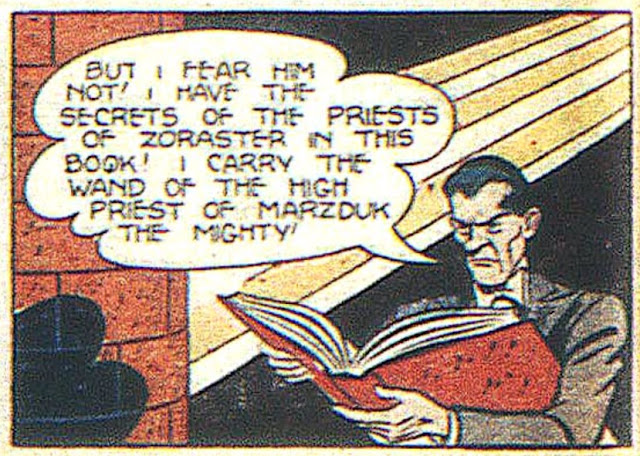
    The Secrets of the Priests of Zoraster (sic) might not be the official title of the book used by Haldane the Sorcerer, but it’s a pretty good title for a made-up book of magic and we have no other options. This one gets left behind in a secret passage rather than being destroyed, so it’s technically up for grabs.

    Origin: Persian? 

    Status: Extant (More Fun Comics 063, 1941)
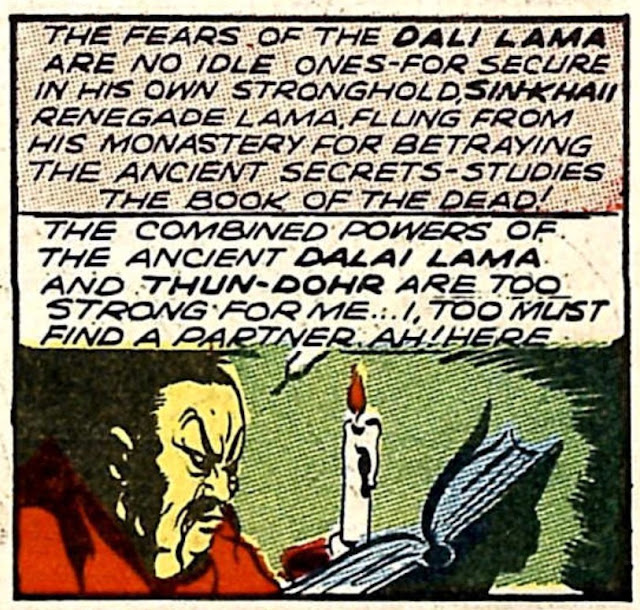
    Though Sin Khaii is an apostate Tibetan Buddhist, the Book of the Dead that he is referencing here is more likely to be the Egyptian on than the Tibetan, as he is using it to research the Black Pharaoh. He also casts spells out of it later!

    Origin: Ancient Egyptian 

    Status: Extant (Silver Streak Comics 014, 1941) 

    Theatre:
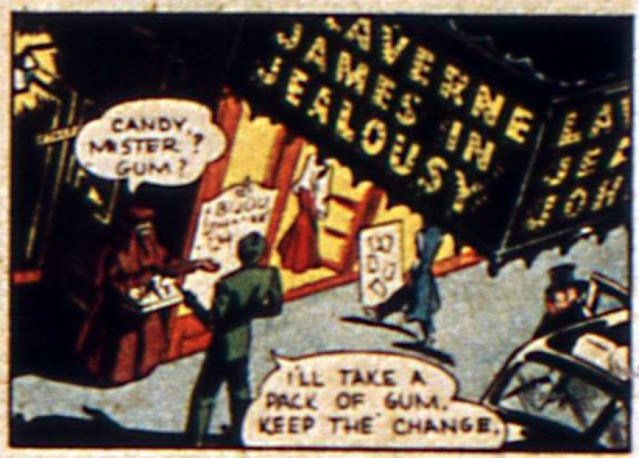
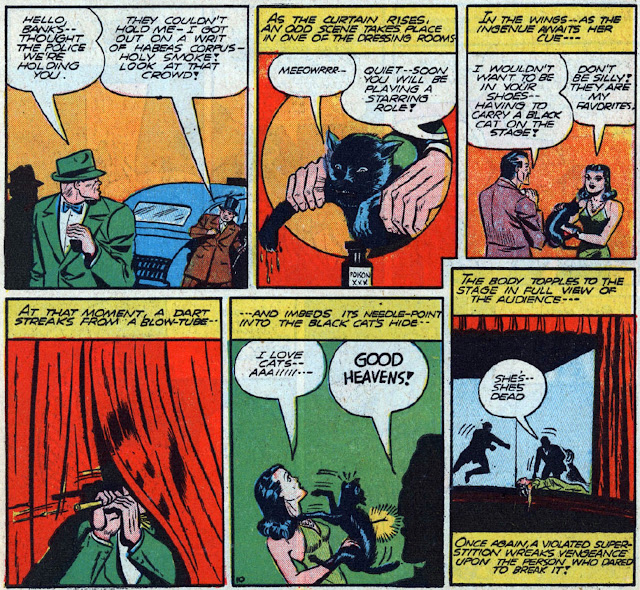
    Detective Larry Steele is called to the set of Jealousy to look into threats against star Laverne James, and then stays to solve the murder of Laverne James. More interesting than the murder mystery, however, is the mystery of just what is going on in this production.
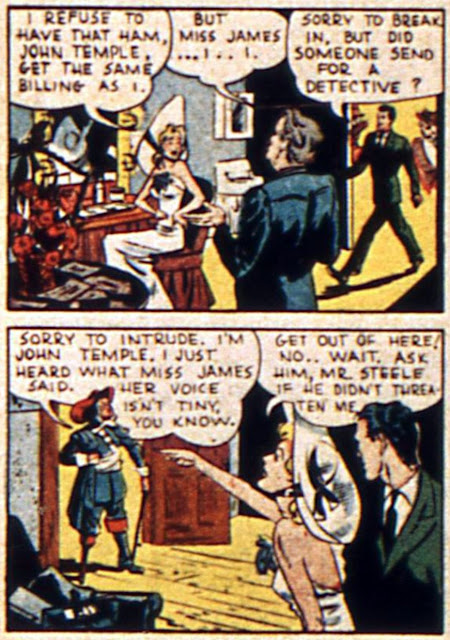
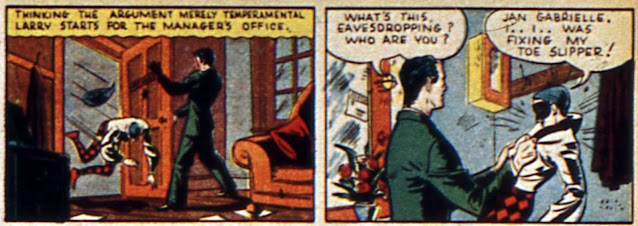
     

    We don’t actually see any of the on-stage action, but the costuming is extremely intriguing: James’ co-stars John Temple and Jan Gabrielle are dressed like off-model commedia dell’arte characters, while she looks more like a character from a Southern Gothic. Finally we have Peggy, who is part of the chorus line and is dressed like she is in a high-budget napkin advertisement. It’s a baffling selection. (Detective Comics v1 047, 1941) 
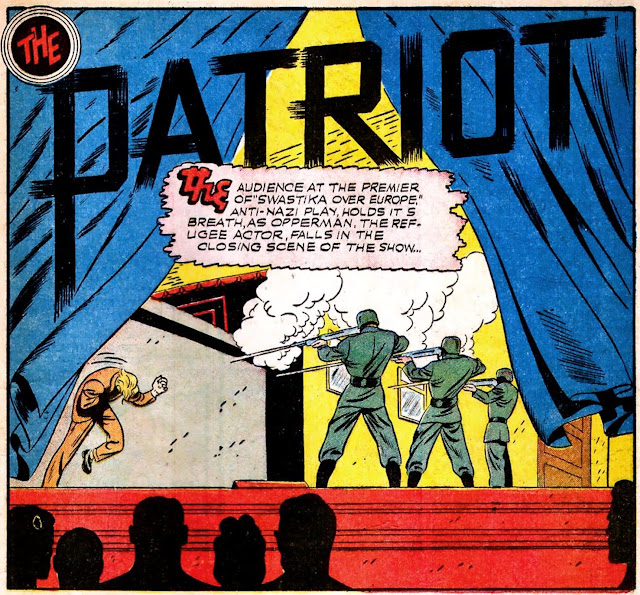
    Swastika Over Europe is a play designed to rally American support for the beleaguered nations of the Continent and as such is a target for sabotage by Nazi fifth columnists, as seen here when lead actor Opperman is murdered on-stage. (Marvel Mystery Comics v1 023, 1941)
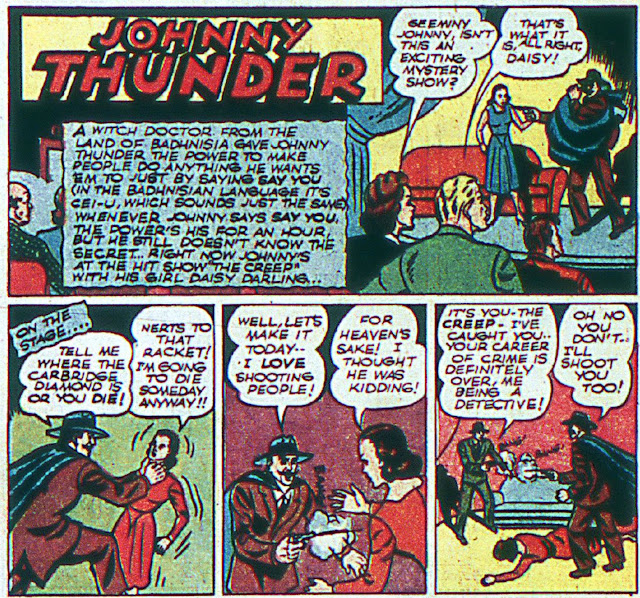
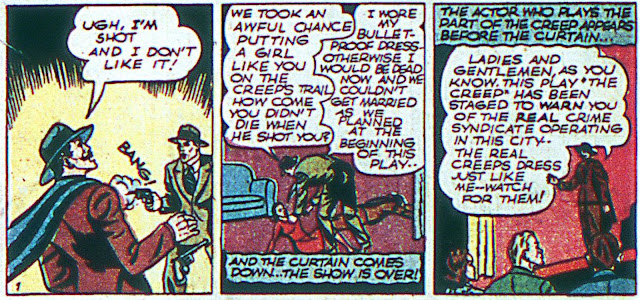
    Here we have The Creep, a play written expressly to warn the people of NYC about the threat of Crime & Corruption, Inc. I guess it works, because Johnny Thunder slapsticks them out of existence. (Flash Comics 013, 1941)
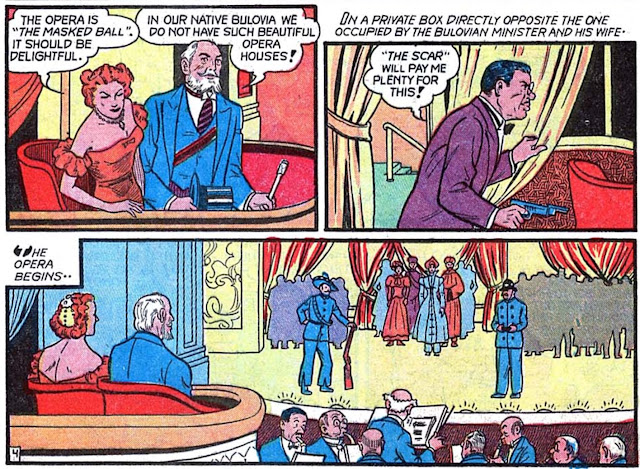
    Ordinarily getting such a good view of the stage would be very exciting to me as it would be a chance to divine some information about the production. Alas, this is an opera called The Masked Ball and so the only thing we can learn is that someone at the titular ball has come dressed as a police officer. (More Fun Comics 067, 1941)
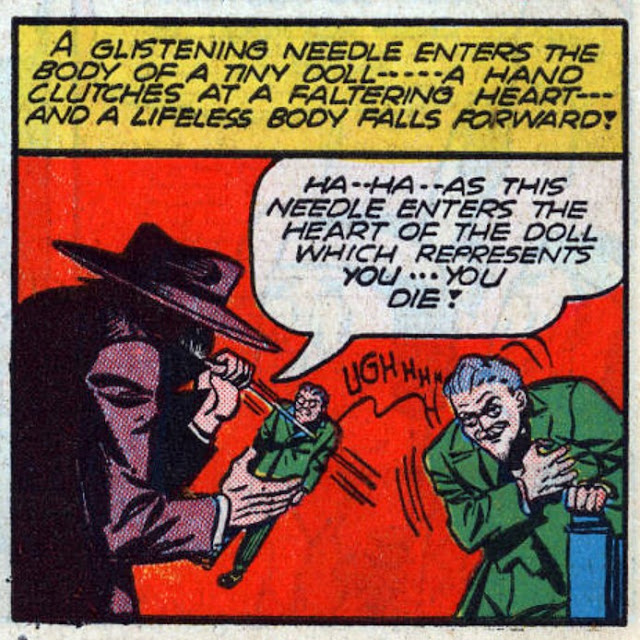
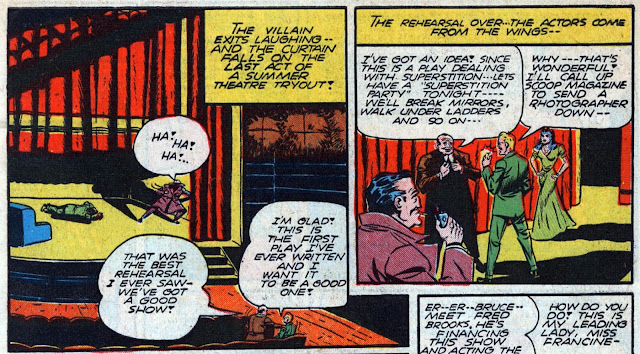
    The Superstition Murders is of course the play written by Johnny Glim the alter ego of the villainous Masked Man, who commits a series of superstition-themed murders in the hopes of tanking the production and thus securing the movie rights for his work. Though the motivation for the fictional killer is unrevealed, this seems to essentially be what the play is about as well. (Batman Comics v1 008, 1941)
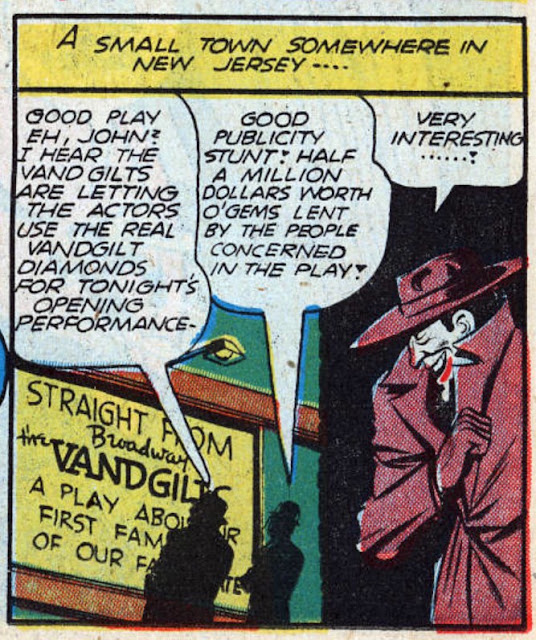
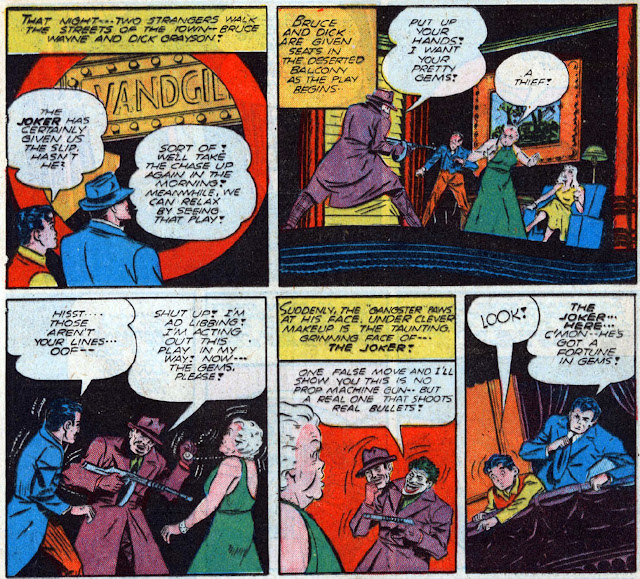
    Though there are many fine plays about the lives of the wealthy, there is no way The Vandgilts, about a real-life family who are on good enough terms with the production to lend them half a million dollars worth of jewellery, isn’t complete sycophantic mush. Luckily the Joker spices things up by robbing the actors mid-performance. (Batman Comics v1 008, 1941)

  • MEDIA IN COMICS 007

    We’ve got some real early media for you today, so get ready for the crustiest scans of microfiche you ever saw.

    Movies:

    Steve Rogers and Bucky almost get to the movies to see a flick called Million Dollar Robbery before being interrupted by a real, if smaller-scale, robbery. BONUS: a classic case of real movies stars barely obfuscated by having their first names swapped, in Humphrey Raft and George Bogart, aka George Raft and Humphrey Bogart. (Captain America Comics 004, 1941)

    Hired to look into dirty dealings on the Stupendous Films lot, Slam Bradley and Shorty Morgan go undercover as stunt doubles. The comedy film that Shorty works on is never named, but Slam briefly works on a film called Jungle Man. (Detective Comics v1 004, 1937)

    Larry Steele’s own investigations into a series of high-profile kidnappings take him to the set of Too Much Money, a movie we never learn anything about. (Detective Comics v1 005, 1937)

    It’s just barely possible to make out that this movie that the Radio Squad boys watch is called The Fighting Cop. A bit on the nose, boys! (More Fun Comics 038, 1938)

    Music:

    Detective Bruce Nelson investigates a series of murders committed on stage while each victim was singing the same song. That song was originally called “The Night is Blue,” but is now known as “The Song of Death.” (Detective Comics 020, 1938)

    In Action Comics 006, a grifter named Nick Williams falsifies some contracts and begins licensing Superman’s name all over town, and one of the results of this is a song! Specifically, a big band tune called “You’re a Superman!”

    I wouldn’t call it the greatest song ever written (no song should include the word “resistless,” for example), but it’s not entirely terrible. (Action Comics v1 006, 1938)

    Newspaper Columns:

    Written by Paul Revere Sr, ultra-patriot and father to comic book adventure kid Paul Revere Jr, “America Awake!” is one of those exciting titles that works for an anti-Nazi column in 1941 and also potentially for a pro-Nazi one in the present. (Banner Comics 003, 1941)

    Jay Garson Jr, aka the Ragman, wrote his “Crime Does Not Pay” column right up until someone tried to kill him for it and he was forced to fake his own death. And then kept on writing it for a while afterward, seemingly mostly in order to give his old editor a hard time. (Cat-Man Comics 001, 1941)

    Radio Shows:

    In addition to “You’re a Superman!” Nick Wilson’s Superman-licensing deals included a Superman radio show, meaning that the DC Universe had one a full two years before we did.

    Wilson also mentions having sold movie and comic book rights, but as he is beaten up and forced to stop his scheme by the real Superman not long after this conversation it’s likely that those never saw the light of day. (Action Comics v1 006, 1938)

    Theatre:

    Slam Bradley and Shorty Morgan investigate the crimes of the Broadway Bandit by getting jobs on Broadway, specifically as tap dancers in a production called Love on Ice that despite its name seems to be a variety show rather than anything with a discernible plot. (Detective Comics v1 016, 1938)

    Renick’s Frolics, the show in which “The Song of Death” appears, is another of these variety productions. (Detective Comics v1 020, 1938)

    We learn nothing about Darkest Dawn other than the fact that someone is trying to kill the lead actress and Nadir, Master of Magic, is on the case. (New Adventure Comics 028, 1938)

  • MEDIA IN COMICS 007

    We’ve got some real early media for you today, so get ready for the crustiest scans of microfiche you ever saw.

    Movies:

    Steve Rogers and Bucky almost get to the movies to see a flick called Million Dollar Robbery before being interrupted by a real, if smaller-scale, robbery. BONUS: a classic case of real movies stars barely obfuscated by having their first names swapped, in Humphrey Raft and George Bogart, aka George Raft and Humphrey Bogart. (Captain America Comics 004, 1941)

    Hired to look into dirty dealings on the Stupendous Films lot, Slam Bradley and Shorty Morgan go undercover as stunt doubles. The comedy film that Shorty works on is never named, but Slam briefly works on a film called Jungle Man. (Detective Comics v1 004, 1937)

    Larry Steele’s own investigations into a series of high-profile kidnappings take him to the set of Too Much Money, a movie we never learn anything about. (Detective Comics v1 005, 1937)

    It’s just barely possible to make out that this movie that the Radio Squad boys watch is called The Fighting Cop. A bit on the nose, boys! (More Fun Comics 038, 1938)

    Music:

    Detective Bruce Nelson investigates a series of murders committed on stage while each victim was singing the same song. That song was originally called “The Night is Blue,” but is now known as “The Song of Death.” (Detective Comics 020, 1938)

    In Action Comics 006, a grifter named Nick Williams falsifies some contracts and begins licensing Superman’s name all over town, and one of the results of this is a song! Specifically, a big band tune called “You’re a Superman!”

    I wouldn’t call it the greatest song ever written (no song should include the word “resistless,” for example), but it’s not entirely terrible. (Action Comics v1 006, 1938)

    Newspaper Columns:

    Written by Paul Revere Sr, ultra-patriot and father to comic book adventure kid Paul Revere Jr, “America Awake!” is one of those exciting titles that works for an anti-Nazi column in 1941 and also potentially for a pro-Nazi one in the present. (Banner Comics 003, 1941)

    Jay Garson Jr, aka the Ragman, wrote his “Crime Does Not Pay” column right up until someone tried to kill him for it and he was forced to fake his own death. And then kept on writing it for a while afterward, seemingly mostly in order to give his old editor a hard time. (Cat-Man Comics 001, 1941)

    Radio Shows:

    In addition to “You’re a Superman!” Nick Wilson’s Superman-licensing deals included a Superman radio show, meaning that the DC Universe had one a full two years before we did.

    Wilson also mentions having sold movie and comic book rights, but as he is beaten up and forced to stop his scheme by the real Superman not long after this conversation it’s likely that those never saw the light of day. (Action Comics v1 006, 1938)

    Theatre:

    Slam Bradley and Shorty Morgan investigate the crimes of the Broadway Bandit by getting jobs on Broadway, specifically as tap dancers in a production called Love on Ice that despite its name seems to be a variety show rather than anything with a discernible plot. (Detective Comics v1 016, 1938)

    Renick’s Frolics, the show in which “The Song of Death” appears, is another of these variety productions. (Detective Comics v1 020, 1938)

    We learn nothing about Darkest Dawn other than the fact that someone is trying to kill the lead actress and Nadir, Master of Magic, is on the case. (New Adventure Comics 028, 1938)

  • NOTES: DECEMBER 2022

    (Detective Comics v1 058, 1941)


    Comic book character of the year Claudia Carol, folks.

    Names: (Doc Savage Comics v1 003, 1941)

    Bit of nominative determinism going on. The protagonist of this piece is Brad Marshall:

    Marshal Brad Marshall:

    Crook name of Bat Crawley (Feature Comics 040, 1941)

    I’m only mostly certain, but I think that “Fasdick” here might be subbing in for “fascist”. The government in question does bear all the hallmarks of being a stand-in for one of the Axis powers, but it’s a wild stretch, even so. (Feature Comics 040, 1941)

  • GENERIC COSTUMED VILLAIN ROUND-UP 003

    Yet another collection of also-rans and never-weres.

    Philip White: 

    Philip White here got exactly one panel into his career as a masked spy chief before Madam Fatal unmasked him. (Crack Comics 014, 1941)

    Basil: 

    An auctioneer named Basil ran an overly complicated scheme to steal the fabled Five Bloodstones of Mu. His plans were also undone by Madam Fatal and ended in his grisly demise. (Crack Comics 016, 1941)

    Unnamed Crook: 

    This unnamed thief almost got away with the Dare Diamond under the very nose of detective Larry Steele. (Detective Comics v1 049, 1941)

    Howard: 

    A baseball pitcher named Howard got up to some shady betting schemes and ended up a generic costumed villain. Let this be a lesson, kids. Also part of his big plan involved shooting himself in the arm with a gimmicked up baseball mitt-gun, which is an early sign that you might not be cut out for costumed villainy. (Detective Comics v1 052, 1941)