The Curse of Skeleton Munroe

Category: Fawcett Comics

  • SUPER-HERO FILE 002: CAPTAIN MARVEL JUNIOR

    SUPER-HERO FILE 002: CAPTAIN MARVEL JUNIOR

    (Whiz Comics 025, 1941)

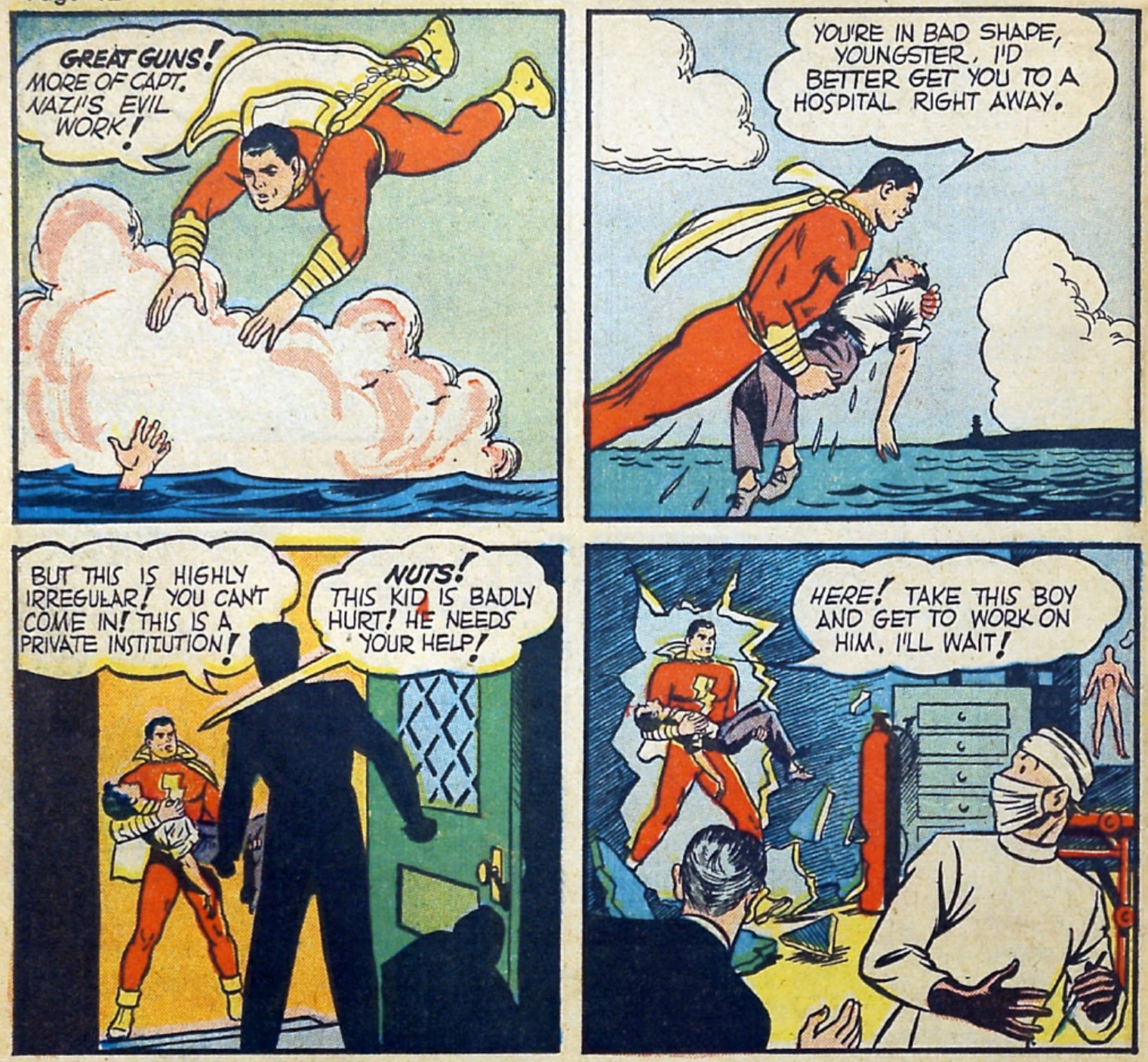
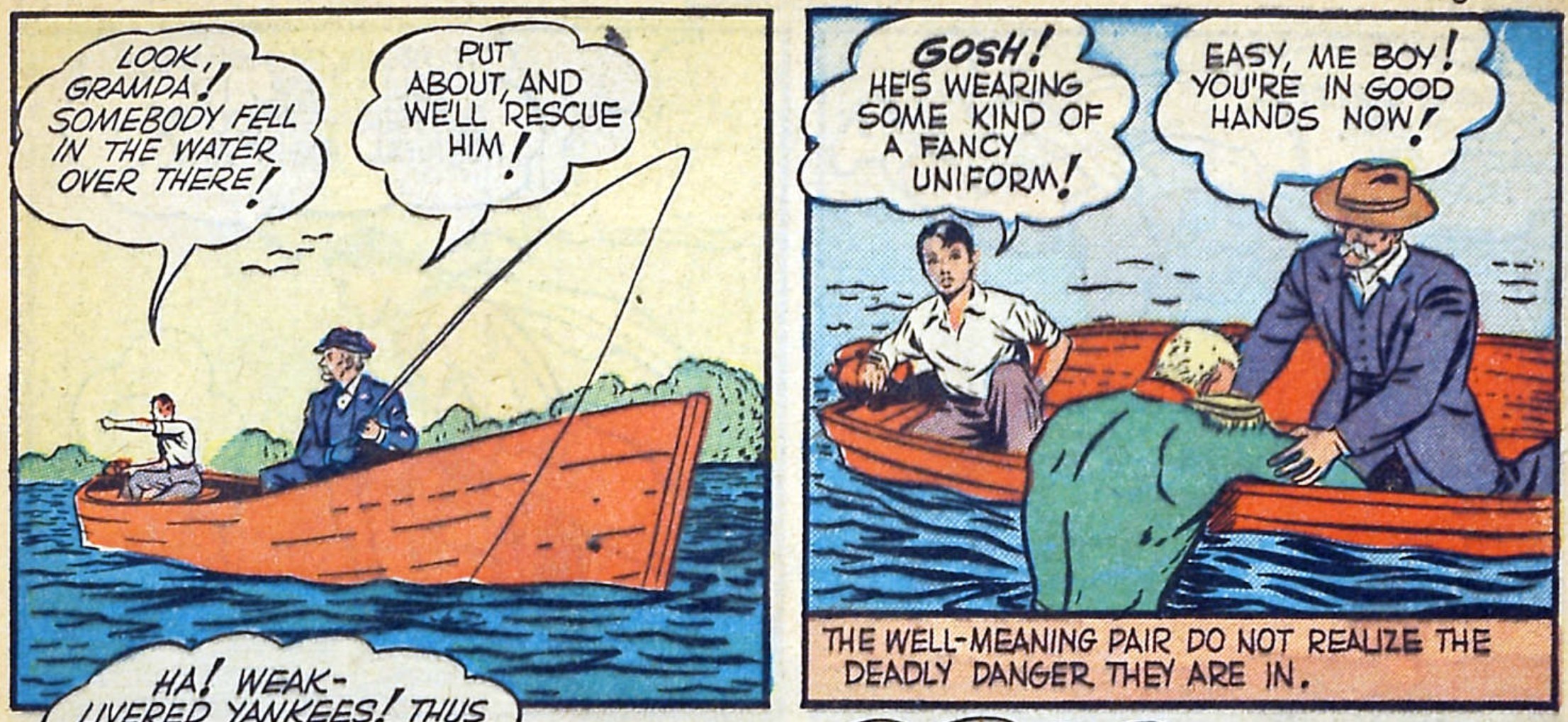
    After the vile Captain Nazi is knocked into New York Fawcett City Harbor during a battle with Captain Marvel, he is pulled from the water by young Freddy Freeman and his grandfather and immediately rewards their good deed by murdering them both. Or so he thinks! It turns out that Freddy is merely grievously injured, and Captain Marvel is able to bring him to a hospital for care.

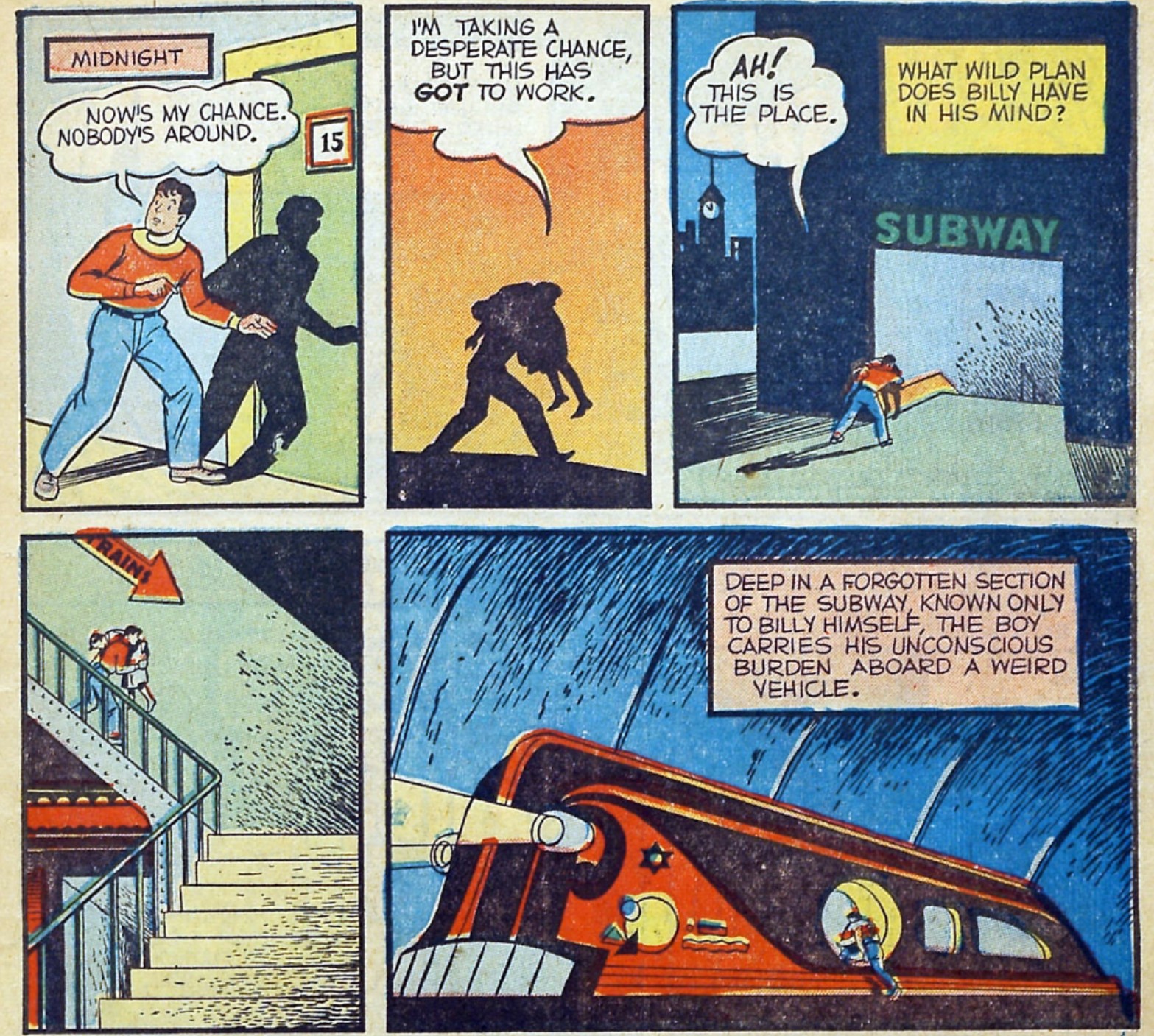
    Informed that Freddy is not expected to live through the night, Billy Batson makes the decision to bring him to the secret underground realm of the wizard Shazam in hopes that he might be able to do something for him. The wizard’s shade is summoned via an apparently mystical brazier (and hey, I think that this is Shazam’s first appearance since he was squashed by that huge block of stone during Billy’s origin!) but rather than help Freddy, Shazam places the onus of doing so on Captain Marvel’s shoulders.

    In practical terms, this means that rather than SHAZAM, the newly-minted Captain Marvel Junior says “Captain Marvel” to transform, which as many have pointed out before me means that he cannot actually say his own name without changing identities. Does the fact that Captain Marvel can do this ever come up again? Perhaps it ties in to the more modern conception of him as a sort of larval being who will eventually evolve into a new wizard, but I’m not sure if it come up in the intervening decades.

    Perhaps my favourite thing about Captain Marvel Junior is that since his comics were not drawn by CC Beck they have a different style to them and that when the Marvel Family are all together they emphatically do not adjust this. Everyone else (except perhaps Mary Marvel) is running around with that clean art style with those little black eyes and Cap Jr just keeps on looking like a young Elvis. It’s always fun!

    UPDATES: 

  • SUPER-HERO FILE 002: CAPTAIN MARVEL JUNIOR

    SUPER-HERO FILE 002: CAPTAIN MARVEL JUNIOR

    (Whiz Comics 025, 1941)

    After the vile Captain Nazi is knocked into New York Fawcett City Harbor during a battle with Captain Marvel, he is pulled from the water by young Freddy Freeman and his grandfather and immediately rewards their good deed by murdering them both. Or so he thinks! It turns out that Freddy is merely grievously injured, and Captain Marvel is able to bring him to a hospital for care.

    Informed that Freddy is not expected to live through the night, Billy Batson makes the decision to bring him to the secret underground realm of the wizard Shazam in hopes that he might be able to do something for him. The wizard’s shade is summoned via an apparently mystical brazier (and hey, I think that this is Shazam’s first appearance since he was squashed by that huge block of stone during Billy’s origin!) but rather than help Freddy, Shazam places the onus of doing so on Captain Marvel’s shoulders.

    In practical terms, this means that rather than SHAZAM, the newly-minted Captain Marvel Junior says “Captain Marvel” to transform, which as many have pointed out before me means that he cannot actually say his own name without changing identities. Does the fact that Captain Marvel can do this ever come up again? Perhaps it ties in to the more modern conception of him as a sort of larval being who will eventually evolve into a new wizard, but I’m not sure if it come up in the intervening decades.

    Perhaps my favourite thing about Captain Marvel Junior is that since his comics were not drawn by CC Beck they have a different style to them and that when the Marvel Family are all together they emphatically do not adjust this. Everyone else (except perhaps Mary Marvel) is running around with that clean art style with those little black eyes and Cap Jr just keeps on looking like a young Elvis. It’s always fun!

    UPDATES: 

  • SUPER-VILLAIN 002 UPDATE: CAPTAIN NAZI (1941)

    SUPER-VILLAIN 002 UPDATE: CAPTAIN NAZI (1941)

    Our second full-fledged super-villain is the odious Captain Nazi, and he had a short but busy run in 1941:

    After being deployed by Adolf Hitler himself as a foil to the threat of the American super-hero, Captain Nazi makes a very public appearance in Times Square in order to issue a challenge to Bulletman. This also attracts the attention of Captain Marvel, leading to the second Fawcett Comics character meetup of 1941 as they decide to team up and kick his ass together.

    In contrast to the bluster of his challenge, Captain Nazis’ activities in NYC are more sneaky sabotage than high-stakes public super-combat. Specifically, an attempt to derail a subway car is foiled by Captain Marvel, while an attempted Ferris Wheel disaster is effectively countered by Bulletman.

    Loathe as I am to praise Captain Nazi  I must admit that he is an effectively ruthless villain – if he didn’t have the misfortune of being pitted against two of the more powerful superhumans available he would be riding roughshod over US infrastructure instead of taking child-hostages and escaping into the shadows.

    After attempt to blow up the Brooklyn Naval Yards – foiled by Captain Marvel, natch – Captain Nazi demonstrates the trademark Fawcett character semi-awareness that he is in a comic book and leaves a note declaring his intent to come over to Whiz Comics to make life difficult there. (Master Comics 021, 1941)

    Sure enough, Captain Nazi returns as promised and continues his campaign of sabotage against a dam and an experimental aircraft.

    After being hurled into the ocean by Captain Marvel, Captain Nazi commits the act that he is most well known for as he repays the kindness of young Freddy Freeman’s grandfather by murdering him and making off with his boat, leaving Freddy himself for dead. This of course is the origin of Captain Marvel Junior, as the only way that Freddy survives is by being imbued with a fraction of Captain Marvel’s own power.

    Thus, the villain once again creates his own nemesis.

    (Whiz Comics 025, 1941)

    BODY COUNT: 3+

    END-OF-YEAR STATUS: At Large 

  • SUPER-VILLAIN 002 UPDATE: CAPTAIN NAZI (1941)

    Our second full-fledged super-villain is the odious Captain Nazi, and he had a short but busy run in 1941:

    After being deployed by Adolf Hitler himself as a foil to the threat of the American super-hero, Captain Nazi makes a very public appearance in Times Square in order to issue a challenge to Bulletman. This also attracts the attention of Captain Marvel, leading to the second Fawcett Comics character meetup of 1941 as they decide to team up and kick his ass together.

    In contrast to the bluster of his challenge, Captain Nazis’ activities in NYC are more sneaky sabotage than high-stakes public super-combat. Specifically, an attempt to derail a subway car is foiled by Captain Marvel, while an attempted Ferris Wheel disaster is effectively countered by Bulletman.

    Loathe as I am to praise Captain Nazi  I must admit that he is an effectively ruthless villain – if he didn’t have the misfortune of being pitted against two of the more powerful superhumans available he would be riding roughshod over US infrastructure instead of taking child-hostages and escaping into the shadows.

    After attempt to blow up the Brooklyn Naval Yards – foiled by Captain Marvel, natch – Captain Nazi demonstrates the trademark Fawcett character semi-awareness that he is in a comic book and leaves a note declaring his intent to come over to Whiz Comics to make life difficult there. (Master Comics 021, 1941)

    Sure enough, Captain Nazi returns as promised and continues his campaign of sabotage against a dam and an experimental aircraft.

    After being hurled into the ocean by Captain Marvel, Captain Nazi commits the act that he is most well known for as he repays the kindness of young Freddy Freeman’s grandfather by murdering him and making off with his boat, leaving Freddy himself for dead. This of course is the origin of Captain Marvel Junior, as the only way that Freddy survives is by being imbued with a fraction of Captain Marvel’s own power.

    Thus, the villain once again creates his own nemesis.

    (Whiz Comics 025, 1941)

    BODY COUNT: 3+

    END-OF-YEAR STATUS: At Large 

  • MINOR SUPER-VILLAIN 911: RAMESES

    MINOR SUPER-VILLAIN 911: RAMESES

    (Whiz Comics 025, 1941)

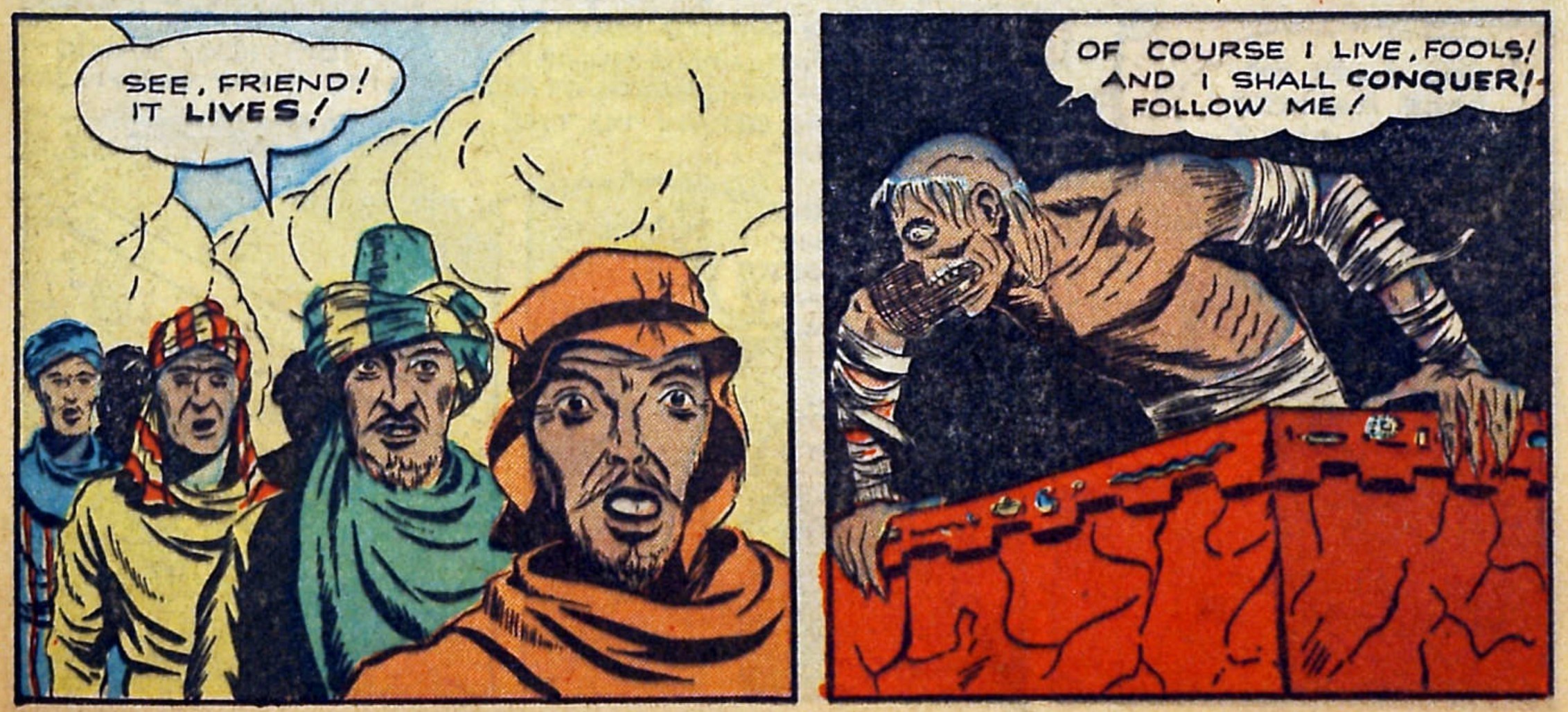
    We open in Egypt, where a group of partisans led by a fellow with the unlikely name of “Girbo, the Mad Mullah”* are brainstorming ways in which they might expel both the Germans and the British from their country, and Girbo has an innovative solution: he has procured the mummy of the Pharaoh Rameses, along with a vial of mummy-resurrection juice, and is going to bring the ancient king back to life to lead them. And it works!

    The problem that I am faced with here is that Egyptian history features a full eleven different rulers named Ramesses and just which one this was is not specified here. I was all fired up and ready to dig through the history of each one (on Wikipedia, at least), when I realized that there was a clear and obvious front-runner in the person of Ramesses II, ol’ Ozymandias himself, if only because he loomed largest in the public consciousness of the time as the presumed Pharaoh of the story of Exodus. 

    *while I’m not going to claim that the depiction of Egyptian Muslims in this story is good or even particularly sympathetic, you must believe me when I say that (aside from Girbo) these guys get about as sympathetic a depiction as you get in comics the 1940s, or indeed into the 80s. It’s a low bar but they cleared it.

    Rameses begins his campaign on a high note, with a raid on a British fort that establishes both his ruthlessness and complete invulnerability to bullets. One must pity his poor horse, however.

    Things take a turn when a Nazi officer shows up with the intention of allying with this new faction against the common British for, only to be slain at Rameses’ command. This violation of the flag of truce raises some concern amongst his followers but what really gets the talking is his assertion that he should be enough of a god for them and that they should abandon their faith to serve him.

    Having driven away his followers with his evil ways, Rameses drives home his point with magical snakes. 

    The loss of his followers means nothing to the undead Pharaoh, who simply raises an army of the dead to assist him in his next assault on the British forces. Meanwhile, Girbo attempts to slay Ibis the Invincible to prevent his further interference in their plans but is himself killed when Ibis proves his better in swordplay.

    Rameses’ undead forces, though formidable, are vulnerable to sunlight, something that the Ibistick can easily provide even though the mechanics of how it might have done so are troubling. But what to do with an eight foot tall megalomaniacal mummy-man? Things look hopeless until Rameses himself lets slip the fact that the only thing capable of containing him is his own tomb that Ibis is able to defeat him, by simply moving said tomb over top of the villain.

    Though Rameses is left to stew in the darkness, he is in fact one of Ibis the Invincible’s few recurring villains. We will see his bony face and weird mummy tonsure again.

  • MINOR SUPER-VILLAIN 911: RAMESES

    (Whiz Comics 025, 1941)

    We open in Egypt, where a group of partisans led by a fellow with the unlikely name of “Girbo, the Mad Mullah”* are brainstorming ways in which they might expel both the Germans and the British from their country, and Girbo has an innovative solution: he has procured the mummy of the Pharaoh Rameses, along with a vial of mummy-resurrection juice, and is going to bring the ancient king back to life to lead them. And it works!

    The problem that I am faced with here is that Egyptian history features a full eleven different rulers named Ramesses and just which one this was is not specified here. I was all fired up and ready to dig through the history of each one (on Wikipedia, at least), when I realized that there was a clear and obvious front-runner in the person of Ramesses II, ol’ Ozymandias himself, if only because he loomed largest in the public consciousness of the time as the presumed Pharaoh of the story of Exodus. 

    *while I’m not going to claim that the depiction of Egyptian Muslims in this story is good or even particularly sympathetic, you must believe me when I say that (aside from Girbo) these guys get about as sympathetic a depiction as you get in comics the 1940s, or indeed into the 80s. It’s a low bar but they cleared it.

    Rameses begins his campaign on a high note, with a raid on a British fort that establishes both his ruthlessness and complete invulnerability to bullets. One must pity his poor horse, however.

    Things take a turn when a Nazi officer shows up with the intention of allying with this new faction against the common British for, only to be slain at Rameses’ command. This violation of the flag of truce raises some concern amongst his followers but what really gets the talking is his assertion that he should be enough of a god for them and that they should abandon their faith to serve him.

    Having driven away his followers with his evil ways, Rameses drives home his point with magical snakes. 

    The loss of his followers means nothing to the undead Pharaoh, who simply raises an army of the dead to assist him in his next assault on the British forces. Meanwhile, Girbo attempts to slay Ibis the Invincible to prevent his further interference in their plans but is himself killed when Ibis proves his better in swordplay.

    Rameses’ undead forces, though formidable, are vulnerable to sunlight, something that the Ibistick can easily provide even though the mechanics of how it might have done so are troubling. But what to do with an eight foot tall megalomaniacal mummy-man? Things look hopeless until Rameses himself lets slip the fact that the only thing capable of containing him is his own tomb that Ibis is able to defeat him, by simply moving said tomb over top of the villain.

    Though Rameses is left to stew in the darkness, he is in fact one of Ibis the Invincible’s few recurring villains. We will see his bony face and weird mummy tonsure again.

  • SUPER-VILLAIN FILE 002: CAPTAIN NAZI

    (Master Comics 021, 1941)

    Our very second full-fledged super-villain is Captain Nazi, a fellow who I would be tempted to shelve under Minor status if it weren’t for the fact that he just keeps on showing up to this very day (or three years ago, at least). Most of the time he’s just padding out a crowd scene and/or acting as a target for some super-hero to really beat the tar out of, but any way you shake it just like real-life Nazis we just can’t seem to get rid of this guy.

    Now you might have guessed it based on his name, but I must tell you that Captain Nazi is in fact one our ever-increasing collection of comic book villains who are actual Nazis and not just German-ish guys with monocles and duelling scars and a fascist attitude. He is also not, as I myself assumed for quite a long time, a Nazi version of Captain Marvel but rather an attempt to counter the idea of American super-herodom as a whole. 

    There’s no real indication of how the Nazis produced a super-human but produce him they did. Captain Nazi has super strength, enhanced agility, some degree of invulnerability and a particularly bad attitude. Aside from some broadening of his power set, all of that basically applies to the character as he exists today.

    UPDATES: 

    Captain Nazi 1941 

  • SUPER-VILLAIN FILE 002: CAPTAIN NAZI

    (Master Comics 021, 1941)

    Our very second full-fledged super-villain is Captain Nazi, a fellow who I would be tempted to shelve under Minor status if it weren’t for the fact that he just keeps on showing up to this very day (or three years ago, at least). Most of the time he’s just padding out a crowd scene and/or acting as a target for some super-hero to really beat the tar out of, but any way you shake it just like real-life Nazis we just can’t seem to get rid of this guy.

    Now you might have guessed it based on his name, but I must tell you that Captain Nazi is in fact one our ever-increasing collection of comic book villains who are actual Nazis and not just German-ish guys with monocles and duelling scars and a fascist attitude. He is also not, as I myself assumed for quite a long time, a Nazi version of Captain Marvel but rather an attempt to counter the idea of American super-herodom as a whole. 

    There’s no real indication of how the Nazis produced a super-human but produce him they did. Captain Nazi has super strength, enhanced agility, some degree of invulnerability and a particularly bad attitude. Aside from some broadening of his power set, all of that basically applies to the character as he exists today.

    UPDATES: 

    Captain Nazi 1941 

  • MINOR SUPER-VILLAIN 910: HERR GLOOBELS

    (Whiz Comics 024, 1941)

    Herr Gloobels is a mysterious and somewhat gruesome figure who murders a motorcycle messenger in order to get ahold of some troop transport schedules and then murders a second one to get them again after Spy Smasher recovers them from the first theft. He does all of this using his Tornado Gun, a device that seems to be a ray gun but which actually fires beams of compressed air that can sink a ship as easily as perforate a hapless guard. 

    Herr Gloobels’ generally chaotic nature leaves us with a number of questions, the most narratively pressing of which is: is this guy a spy or what? There’s no real talk of the War Lord or any other Axis stand-in and Gloobels seems to be driven by scientific megalomania as much as any desire to advance the cause of world fascism. Maybe he’s just wacky.

    The second question is of course: what’s the deal with Gloobels’ assistant Hugo? Is he a trained gorilla? An ape-man? Something more racist? It’s never specified.

    Thirdly: just why does he look so much like a Basil Wolverton character in that last panel? Don’t get me wrong: it’s a good look! It’s just not quite what he looks like the rest of the time.

    After a spirited melee in Gloobels’ lighthouse HQ, Hugo ends up taking a Tornado Gun blast meant for Spy Smasher and is sent to his final reward. This seems to take the wind out of Gloobels’ sails and he surrenders without further incident – a surprising demonstration of affection for a henchman, particularly for a homicidal scientist type like Gloobels. The Tornado Gun is supposedly turned over to the US military for study, but as with all of these captured super-villain weapons they seemingly put their worst men on the job because the Allied forces continued to rely on plain old bullets.

  • GENERIC COSTUMED VILLAIN ROUND-UP 034

    Since we’re currently reading Whiz Comics for 1941, it’s time yet again for another load of unscrupulous people to get their hands on the Ibistick and then kill themselves with it. And here they are:

    the Widow Zorn:

    Ibis lends the Ibistick to old Professor Grubb  for scientific study after Grubb finds it outside of an exploded building and uses its magic to restore the building and everyone inside – which included both Ibis and Taia, along with their their young ward Tommy – to wholeness and life. This isn’t a bad idea per se, as Grubb is an honest man, but he is also in love with the scheming Widow Zorn, who vamps it away from him in about two seconds flat.

    Zorn’s main interest is in conjuring up hunks to fight for her attention, so the damage potential in her having the Ibistick is a bit lower than some (although she does vaporize poor old Prof Grubb when he kicks off about it). She does of course try to kill Ibis with his own wand and ends up on the Moon for her trouble, but fortunately for her the reconstituted Grubb advocates for not letting her explode or whatever and she ends up falling for him after all. (Whiz Comics 012, 1941)

    Trug: 

    Trug gets his own super-villain entry, the jerk. 

    the Chief: 

    The Chief isn’t a villainous figure per se, but his role in the comic is close enough that I’ll say that he counts. The leader of an Inuit group subjugated by Trug, the Chief recovers the Ibistick after Trug loses it in a magical air raid and turns the tables on the villain by imprisoning him in his own palace.

    The Chief lives through the process of confronting Ibis by simply being a fair fighter and not deigning to use magic where fists will suffice. Fair-ish, at least – he is nine or ten feet tall at the time. Still, Ibis manages to win their fight and reclaims his wand. The Chief and his people are returned to their original sizes (as the latter had been shrunk by Trug to ensure obedience) and get to keep Trug’s palace to boot. (Whiz Comics 014, 1941)

    A Spider: 

    When Ibis and Taia leave the Chief and his people they are given a stone as a gift, and after having it appraised and finding out that it is an enormous and valuable ruby Ibis decides to give it back. Rimson, the appraiser, objects to this and attempts to claim the ruby for himself, and to that end he shoots out the couple’s car tire, causing them to crash into a gorge.

    Ibis and Taia survive thanks to the magic of the Ibistick, but the wand is dropped in the shuffle and chanced upon by a colourful and anatomically dubious spider that manages to envision its desires well enough to become both enormous and intelligent. 

    The arch-cad Rimson soon falls to the spider’s fangs, and Ibis is forced to battle it lest he and Taia likewise be eaten. He manages to mortally wound it with an improvised spear and then it finishes itself off by wishing for Ibis to fade to nothingness. It’s a sad end for what I reckon might be our very first animal villain. (Whiz Comics 015, 1941)

    Mudge: 

    Mudge was already wanted for murder, minus a soul thanks to a deal with Satan (actually the villain Trug in disguise – not sure if that affects the validity of the soul sale) and afflicted with a donkeys ears thanks to Ibis when he acquires the Ibistick after it has been dropped in a a struggle. If any villain could use a break like this it’s him, but he immediately screws up his chance by trying to afflict Ibis with chains. (Whiz Comics 020, 1941)

    Unnamed Fascist:

    This unnamed officer in the army of the War Lord not only speed-runs the process of reckless Ibistick use leading to disaster but manages to take down an entire invasion force with him thanks to his grandstanding, as he tries to wipe out Ibis and the entire army he’s with all in one go.

    Please also note Ibis foe Half-Man in the above panels, who is remarkable for being the only villain to date to avoid this kind of thing by not using the Ibistick at all. Presumably he is wise enough to keep tabs on how other villains have met their downfalls. (Whiz Comics 024, 1941)